

My friend Ann recently filmed her first 5-second video: a clip of her at work painting one of her seascapes. You can see her brush moving at the bottom and imagine gulls screeching somewhere off-frame. She wasn’t trying to make an instructional video, and she didn’t plan to publish it to YouTube to get hits. She’s not a videographer; she just shot it on her cell phone for the first time, mostly for her own pleasure — something to show friends on Facebook, a proof of an afternoon well spent. Maybe a client will see it and buy one of her paintings.
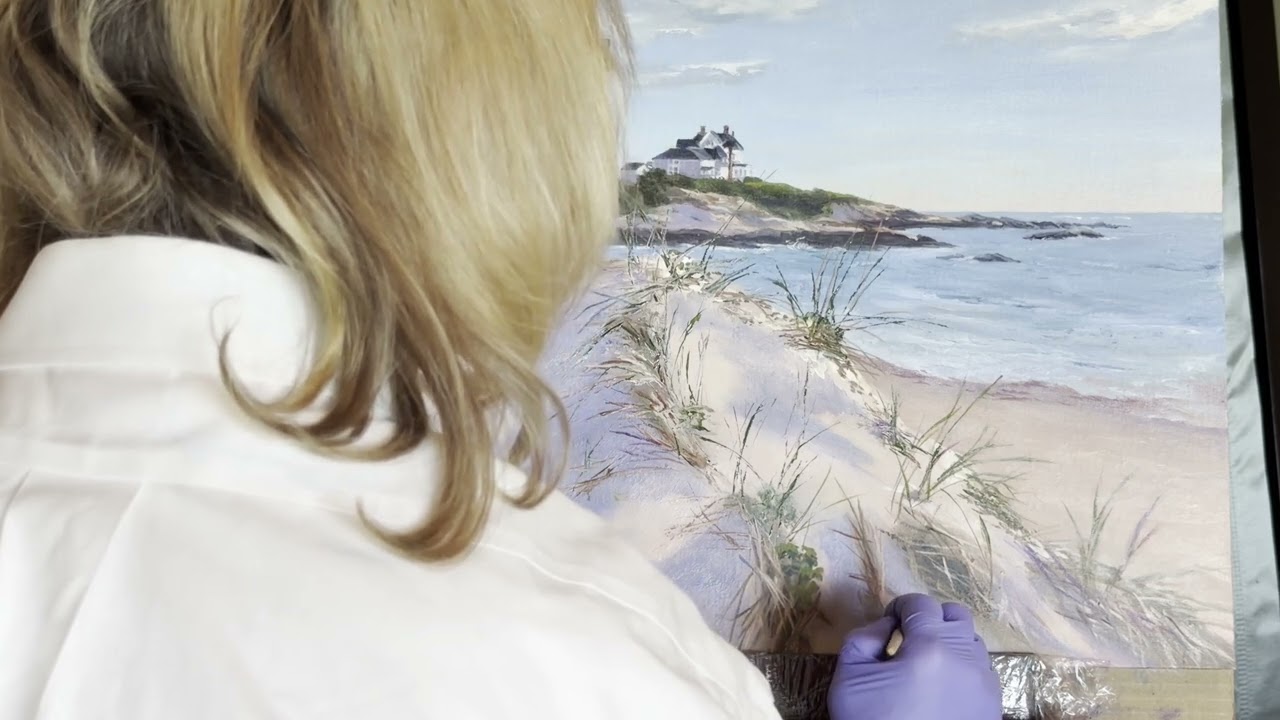
Ann Webb at Work on a Painting
She’s part of a growing trend I’ve come to think of as video snapshooters: makers of short, unpolished, unpretentious video clips captured not as much for an audience (although that may change), but mostly for memories.
Since the Kodak Brownie (1900), the snapshot has been a photograph, a still frame pulled out of a moving life and passed around. “Look at me! I was here and look who else was too!” You didn’t have to stand in line at a photography studio to get cards made.
Now people are reaching for video instead. And why not? The vid-cam is already in their pockets. Some will even become hobbyists and graduate to the nifty Chinese-made DJI Osmo Pocket. A few years ago, this palm-sized gimbal camera didn’t take long to break Youtube with its buttery-smooth stabilization, professional-grade video, and pocket-friendly portability.
Even the pundits don’t try to trumpet this as photography’s replacement. The smart ones see it as an expansion. Video doesn’t erase the still image. It adds a dimension the photograph never had: sound, motion, the volatile texture of a moment as it changes into something else. Your cousin singing at a karaoke event and hitting the wrong note. Somebody getting soaked trying to dodge raindrops. The more enterprising ones become tinkerers and copy videos to their computers to edit in specialized programs. Videos can even contain still photographs that fledgling videographers can insert. That combination is a powerful upgrade to how ordinary people preserve memory.
Video snapshots have barged into another ancient hobby stronghold and made it their own. Travel video snippets are a fast-growing extension of the older hobby of travel photography, and the appetite is immense. Travel video viewership on platforms like YouTube and TikTok has surged in recent years, and travelers increasingly say social content shapes where they go. A fado singer in Lisbon serenading a sunny plaza. A slow climb up a railing-less castle stairway. (Watch out!)
What’s new is its immediacy. Travelers now capture the sounds and sights of a foreign street market or a cathedral bell tower and can share it before they’ve even left the plaza. Unedited of course, but who cares about that?
Part of what’s made this possible is how cheap and good the tools have become. A phone braced on a $15 tabletop tripod produces remarkably steady, pro-level footage. Do an eye-catching time-lapse of a sunset on St. Mark’s Square and you might be able sell it to a travel agency.
If you’re ambitious, you could enhance your footage with a wireless mic like DJI’s tiny Mic 3, a device barely bigger than a coin that records rich audio. Unbelievably, it can transmit cleanly from about a quarter mile away. An amateur can produce audio that rivals a broadcast interview. An Osmo Pocket 3, a selfie stick, two of those mics, and a couple of spare SD cards fit easily into a fanny pack you wear around the waist. That’s how I filmed my video snapshots in Scotland two years ago.
You may think that this adoption of high-quality video has been easy, but it hasn’t. In late December 2025, the Federal Communications Commission added DJI and other foreign drone makers to its “Covered List,” a national-security designation that blocks new equipment authorizations. DJI’s newer Osmo Pocket 4 has been unable to launch officially in the U.S. Stay tuned. It’s still developing.
As an example of travel snapshots, I’ve included at the end of this piece my own eleven-minute travel video, Eight Minuscule Films About San Francisco, a string of video snapshots of the city: the Golden Gate Bridge catching the last light of sunset, the Paramount Theatre marquee glowing at night, a candid conversation with a hotel-management student moonlighting as a sex worker, and a midnight drive through Chinatown scored with jazz. None of these required a film crew. All I had to do was hit record.
Where does this go next? Industry watchers expect the momentum to keep building: travel-related video content is projected to keep climbing sharply as smartphone cameras and pocket gimbals close the quality gap with dedicated cinema gear, and analysts increasingly describe these short, personal videos — not the polished influencer reel — as the fastest-growing category of everyday content. If the last twenty years belonged to the digital snapshot, the next twenty may well belong to its noisier, moving cousin. Ann, for one, is already planning more videos.
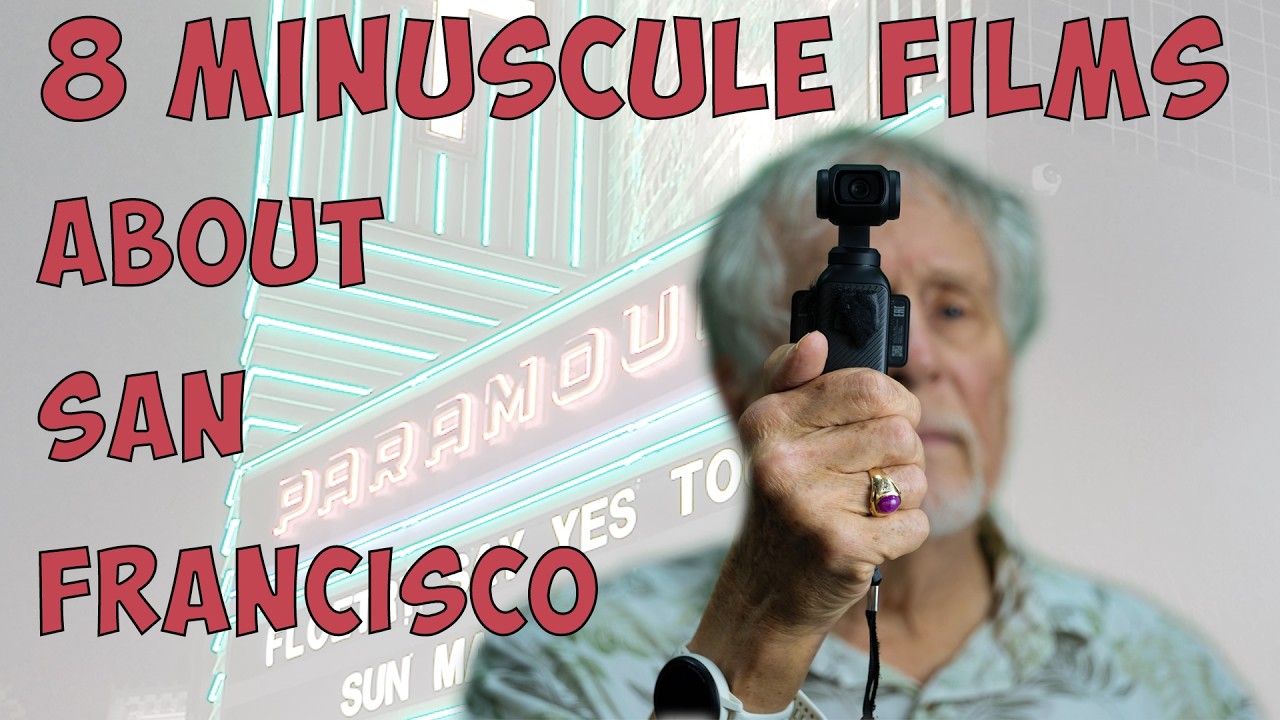
8 Minuscule Films About San Francisco


